


When collecting a car from China in Poland, do not start by asking whether the paintwork shines. First, check that it is the exact vehicle you paid for, that the documents match the car and that the equipment meets the agreed specification. This is the easiest time to identify a problem that could later cost you time, money or a dispute with the seller.
Collection is about more than the car’s condition: it also matters what you are left with after the transaction, including all keys, registration documents, the correct version, tyres, accessories and the first expenses after leaving the forecourt. Below is a practical checklist to help you assess the offer without guesswork. If you want to compare several cars before collection, it is also worth browsing the current offers or speaking to an advisor through our contact page.
First, confirm that you are collecting the right car
With a car from China, an identification error does not necessarily mean deliberate fraud. It may be a mix-up over the year, version or equipment package, or an incomplete description from an intermediary. Start by comparing the details in the listing and contract with the car in front of you.
What must match before starting the car
- The VIN on the car and the VIN in the documents.
- The make, model and body version.
- The year of manufacture or first registration date, if shown in the documents.
- The exterior and upholstery colours, if specified in the agreement.
- The advertised mileage and the odometer reading.
If any of these details do not match, do not dismiss it as minor. Differences between imported versions can mean a different powertrain, safety systems, infotainment or missing features that influenced your decision. This is precisely where an experienced advisor can reduce risk: an independent person may spot more quickly that the car does not match what was agreed.
Documents when collecting a car from China: which ones really matter
For a car from China, documents are not just paperwork to file after purchase. Each serves a different purpose: proving ownership, enabling registration, recording the import history or supporting finance. If anything is missing, the car may be on the forecourt but still not ready for legal use.
| Document / confirmation | Why it is needed | What to check |
|---|---|---|
| Ownership or sale document | Confirms who transferred the car and on what terms | The parties’ details, VIN, date and consistency with the agreement |
| Import documents | Provide a formal trail from purchase to collection | Whether they are complete and consistent with the VIN |
| Registration documents | Without them, you cannot submit a complete application to the authorities | Whether anything is missing for the procedure in Poland |
| Finance confirmation | Important if the car is purchased using a loan, lease or rental arrangement | Whether there are any restrictions on handing over the car |
In practice, being told “the documents will follow” is not enough. At collection, you should receive a clear explanation of what is complete, what remains to be supplied and when. If you buy with AzjaAuto’s help, an advisor can check in advance whether the documents support the planned registration and whether any gaps could hold up the entire process.
Equipment: check how it works, not just the list
A common mistake when buying a car from China is focusing on the equipment list rather than whether the features actually work. The description may list a panoramic roof, 360 cameras, heated seats, driver assistance systems or a powered tailgate, but at collection you need to activate and test them all.
Features worth checking on site
- Infotainment and interface language.
- Air conditioning, ventilation and temperature zones.
- The reversing camera and any 360 system.
- Seat heating and ventilation, if fitted to this version.
- Driving assistance: adaptive cruise control, blind-spot monitoring and lane keeping.
- Electric windows, mirrors, roof and tailgate.
- Phone charging, USB ports and power sockets.
Do not ignore small details. On an imported vehicle, a single missing module or incorrectly paired system can indicate a problem with the version, a repair or the electronics along the way. Ask straight away whether the feature was factory-fitted to that variant or added later. This is particularly important with cars such as BYD, Geely or Chery, where differences between versions can significantly affect comfort and value.
Keys, remotes and security: do not complete collection without testing them
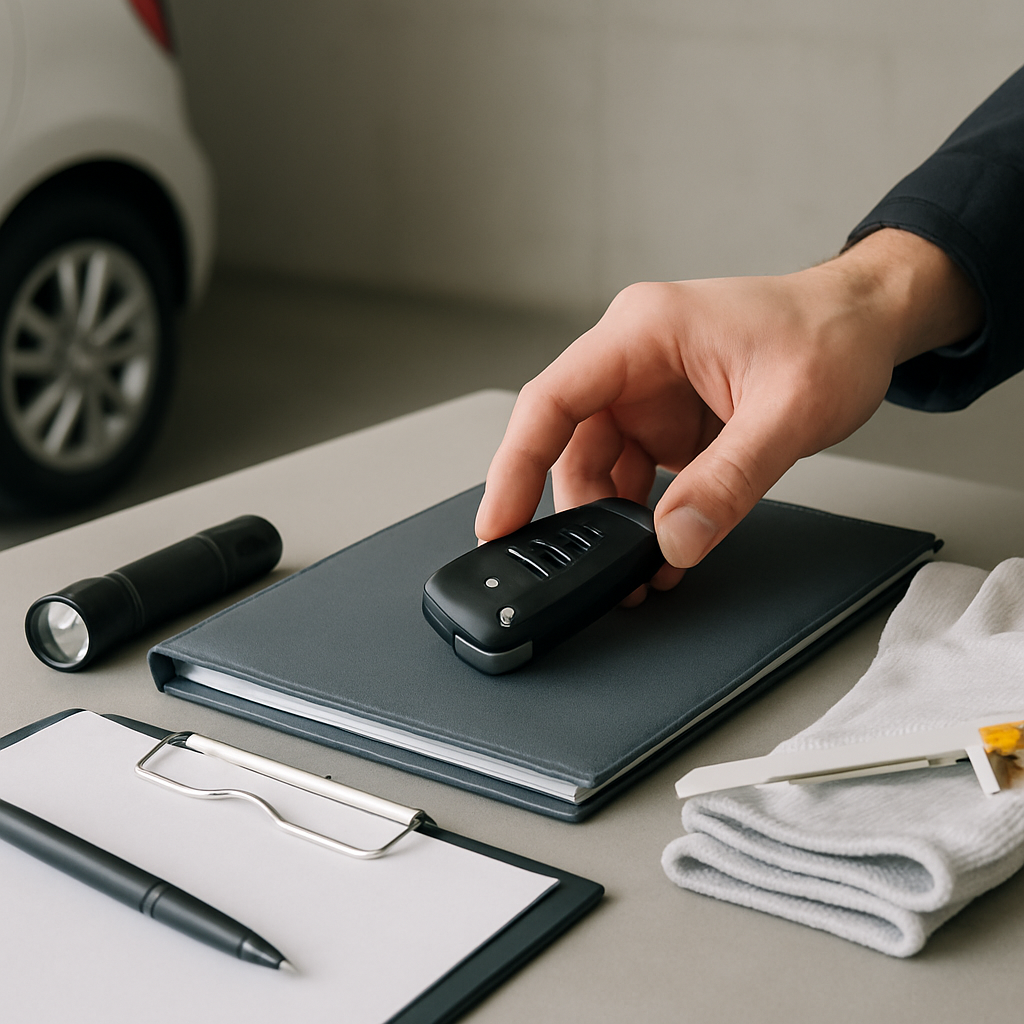
A missing key is not a minor detail: it can mean an expense and a practical problem. At collection, check the number of remotes, button operation, locking and unlocking range, and whether the car starts without errors. It is also worth checking immediately that keyless entry systems respond normally.
If the vehicle has proximity functions, coded security or a mobile app, ask for a demonstration. Adding a key, resetting permissions or restoring access later can be costly and time-consuming. This is especially important with electric and plug-in cars, where electronics can be closely integrated into everyday use.
Tyres and wheels: tyre condition reveals more than you might think
Many buyers collecting a car from China focus on the bodywork and overlook the tyres. That is a mistake because tyres immediately affect safety and your initial costs. Check the tread, manufacturing date, evenness of wear and whether the size matches the documents and vehicle version.
What to check on the wheels
- Tread depth and uneven wear.
- The year the tyres were manufactured, not just their appearance.
- Wheel and tyre sizes appropriate for the vehicle version.
- The condition of the spare wheel or repair kit, if supplied.
- The presence of tyre pressure sensors and absence of error messages.
If the tyres are in poor condition, budget for replacement immediately. Do not put it off until “later”, because it is a post-collection cost that will arise very soon anyway. With large SUVs from China and heavier electric versions, a set of tyres can cost noticeably more, so include it in the total purchase cost before signing for collection.
Interior condition and early signs of use
The interior is a good test of whether the mileage and description are credible. Look at the driver’s seat, steering wheel, buttons, armrest, central screen and door trim. An attractive photograph is not enough: signs of wear are often more apparent inside than on the bodywork.
Also check the smell in the cabin, ventilation, floor mats and any signs of damp. If the car is for family use, assess whether the rear really meets your needs: space for a child seat, ease of entry, the number of mounting points, USB access and ventilation for rear passengers. These details determine how comfortable the car will be day to day.
Costs after collection: what to add immediately
Collecting a car from China does not end the spending. Your budget needs to include expenses that arise just after handover or before the first journey. This prevents a “good buy” from becoming expensive only once the vehicle is brought fully into usable condition.
| Item | Why it may arise | What to do before collection |
|---|---|---|
| New tyres | The tyres may be worn or unsuitable | Check the size, tread and manufacturing date |
| Initial servicing | Fluid or filter changes, or a post-import inspection | Establish what was done before handover |
| Registration and formalities | Without them, the car cannot legally be driven on the road | Check that all paperwork is complete |
| Insurance | Needed to use the car after collection | Calculate the premium before your final decision |
| Additional key or programming | An incomplete set of remotes increases the cost | Check the number of keys at handover |
If you are buying on finance, this stage matters even more. The monthly payment is only part of the picture. Your initial contribution, insurance costs, any work needed to make the car fully ready and post-collection expenses all affect whether the purchase genuinely fits your plans. This is where AzjaAuto’s support is useful: an advisor will not only compare the offer, but also show a fuller cost for the entire process before an unnecessary expense arises.
When collection can be considered safe
Collection is safe when you rely on matching facts rather than a general impression. If the VIN matches, the documents are complete, the equipment works, all keys are present, the tyres do not need immediate replacement and subsequent costs fit your budget, the decision makes sense. If, however, there are version discrepancies, missing documents or uncertainty about keys and equipment, it is better to stop the process than deal with the consequences later.
You can handle collection yourself, but it is easy to miss one issue that costs more than a consultation. An AzjaAuto advisor helps you assess the car more broadly: not just its advertised price, but also document consistency, actual condition, equipment and the cost of making it usable. This is particularly important with cars from China, where differences between versions and markets may be less obvious than with familiar European models.
How AzjaAuto can help at collection
If collection is handled remotely, in another city or after import, AzjaAuto can help organise the process. The practical value goes beyond simply offering advice: it means checking the consistency of the offer, whether documents match the VIN, whether equipment matches the version, whether there are hidden costs after collection and whether the purchase still makes sense once all expenses are included.
In practice, this means less risk of a mistake when signing, less time spent chasing missing paperwork and a lower chance of unexpected problems after collection. If you want to approach this stage carefully but without guesswork, it is worth starting by contacting an advisor or exploring the wider context in our articles.
FAQ
Is checking the documents enough when collecting a car from China?
No. Documents are essential, but the VIN, keys, working equipment, tyre condition and whether the car matches the advertised version are equally important. A complete set of paperwork alone does not guarantee that you are collecting exactly the vehicle you expected.
What should you do if the equipment does not match the listing?
First, compare the equipment with the contract, offer and version identifiers. If the difference is significant, do not complete collection without an explanation. With cars from China, such discrepancies can affect value and future resale.
How many keys should you receive at collection?
In most cases, you should receive the full set agreed at the sale. If a remote is missing, clarify this before collection, as replacing or programming a key can be expensive.
Are tyres in average condition a problem at collection?
Yes, if they will soon need replacing or are the wrong size for the vehicle version. Tyres are one of the first real costs after collection, so account for them before making your final decision.
When should you consult an advisor about collection?
When the car is imported, is an unusual version, has missing documents or is being bought without a personal inspection. In these situations, an advisor may spot a problem before it becomes an expensive mistake.
What to remember before collection
For a car from China in Poland, what matters most is not how it looks from a distance, but whether everything matches: documents, VIN, version, equipment, keys and tyre condition. Only after adding post-collection costs can you see whether the purchase is genuinely good or merely looked attractive at the outset.
If you want to reduce risk and assess a particular vehicle more quickly, you do not have to do everything yourself. Contacting AzjaAuto helps make collection calmer, with better checks and a fuller calculation before your final decision.